
On this page
T-shirt fabrics for wholesale garment production.
T-shirt fabrics should be compared against the intended fit, opacity, print method and finished garment specification. For T-shirt production, compare the garment fit, season, opacity and intended print before choosing the fabric. Single jersey is a common starting point for everyday T-shirts. Interlock offers a different double-knit structure, while cotton/elastane briefs introduce specific stretch and recovery requirements. The right choice depends on the approved sample and garment design.
Send the target finished GSM and usable width together with the size range and intended decoration. For printed T-shirts, specify whether the fabric will be printed before cutting or the garment will be decorated later, so the material and finishing brief can be reviewed in the correct context.
The garment-to-fabric brief.
| Specification | What to confirm for your order |
|---|---|
| Structure | Single jersey, interlock or another agreed knit. |
| Fabric behaviour | Specify opacity, handle, drape and any stretch requirement. |
| Cutting considerations | Confirm usable width and required dimensional stability. |
| Colour and print | Provide colour splits and explain the planned decoration process. |
| Bulk order | State quantity per colour and whether the fabric will be reordered regularly. |
Prepare for bulk garment manufacturing.
Approve the fabric against the intended wash and care conditions. Review shrinkage, spirality where relevant, surface appearance and any print compatibility requirements. Retain the approved reference so that future orders can be compared with the same standard.
For repeat T-shirt programmes, share a demand forecast and target order-release dates. Quotations should use the same composition, GSM, width and finish when comparing alternatives.
Relevant fabric choices.
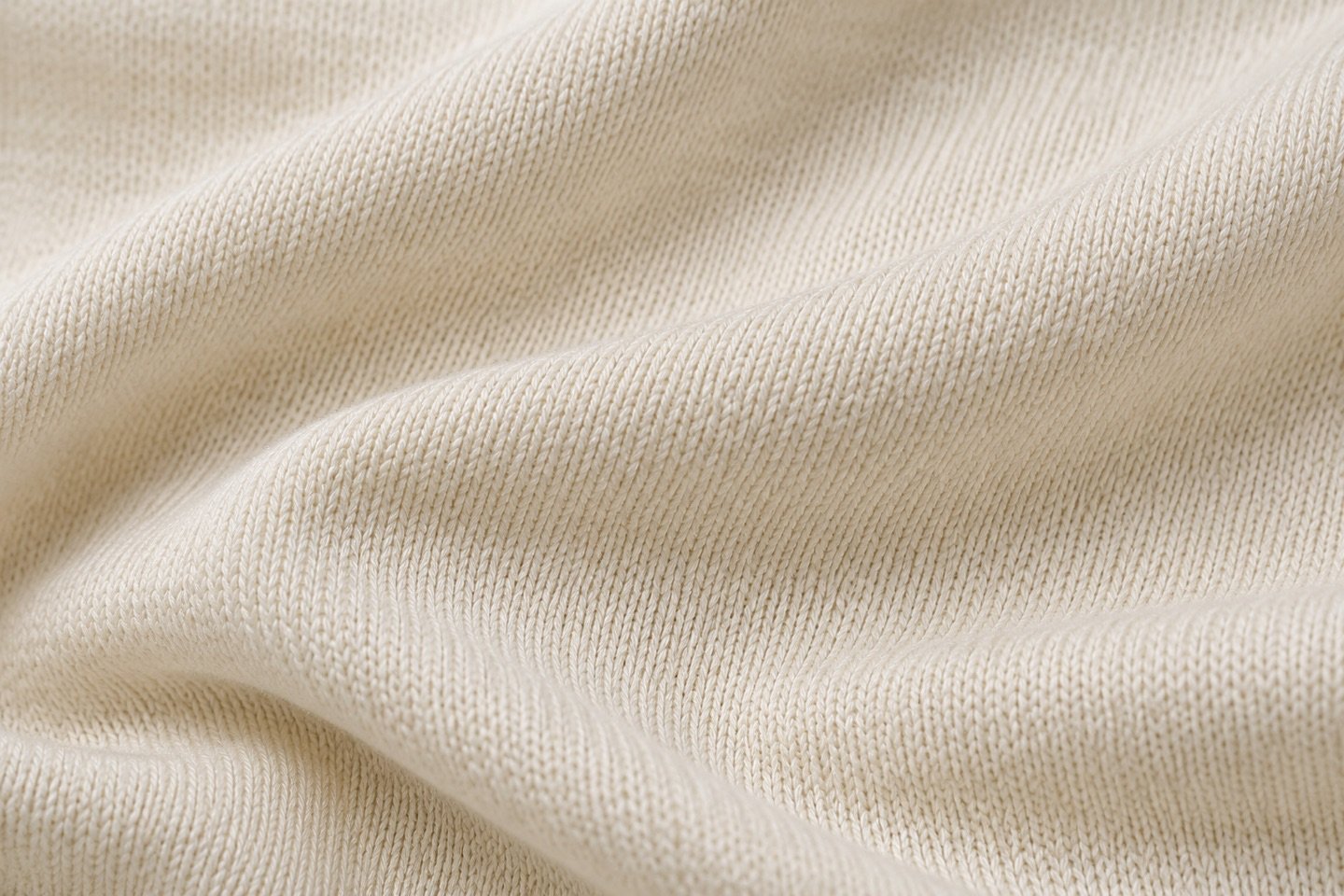
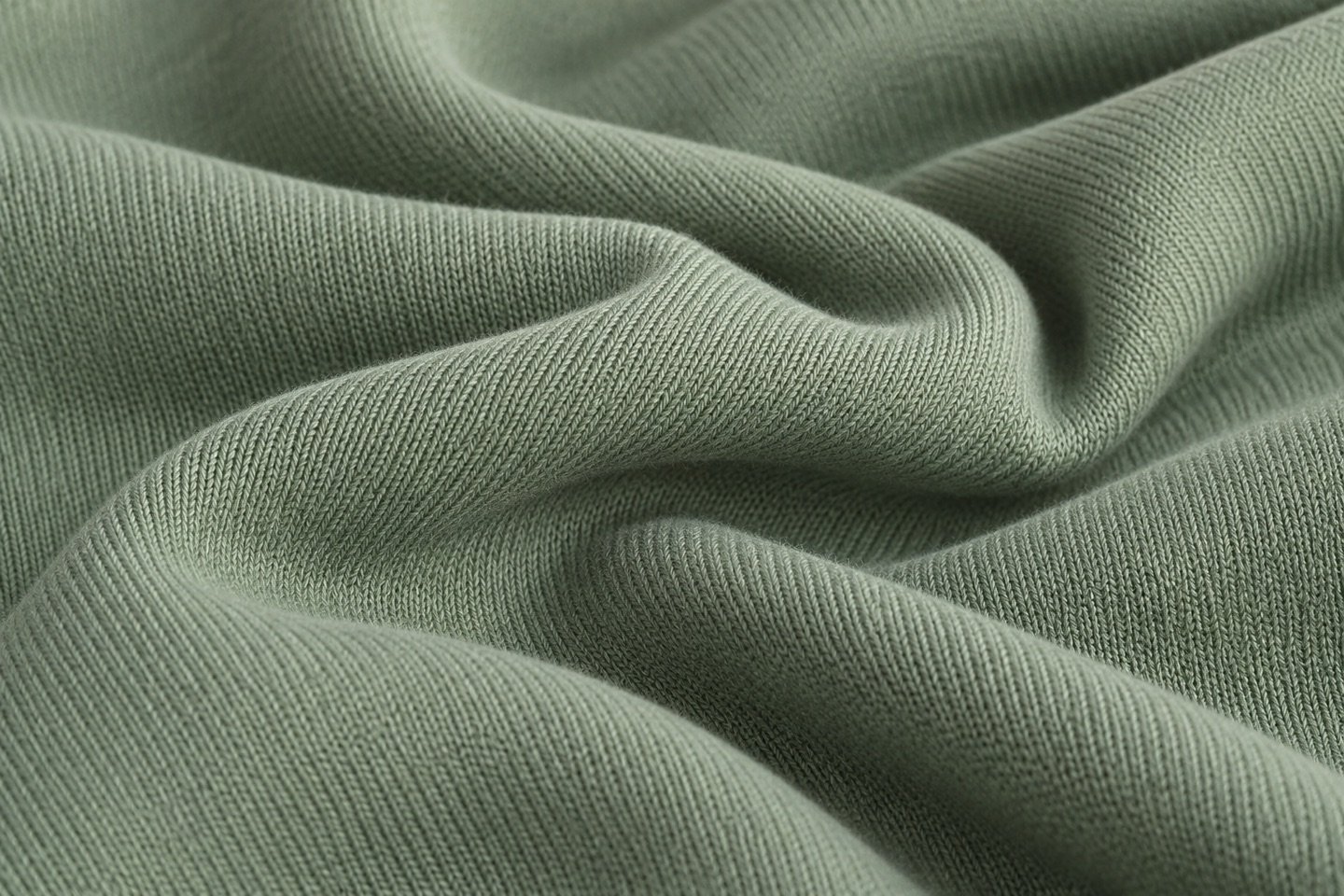
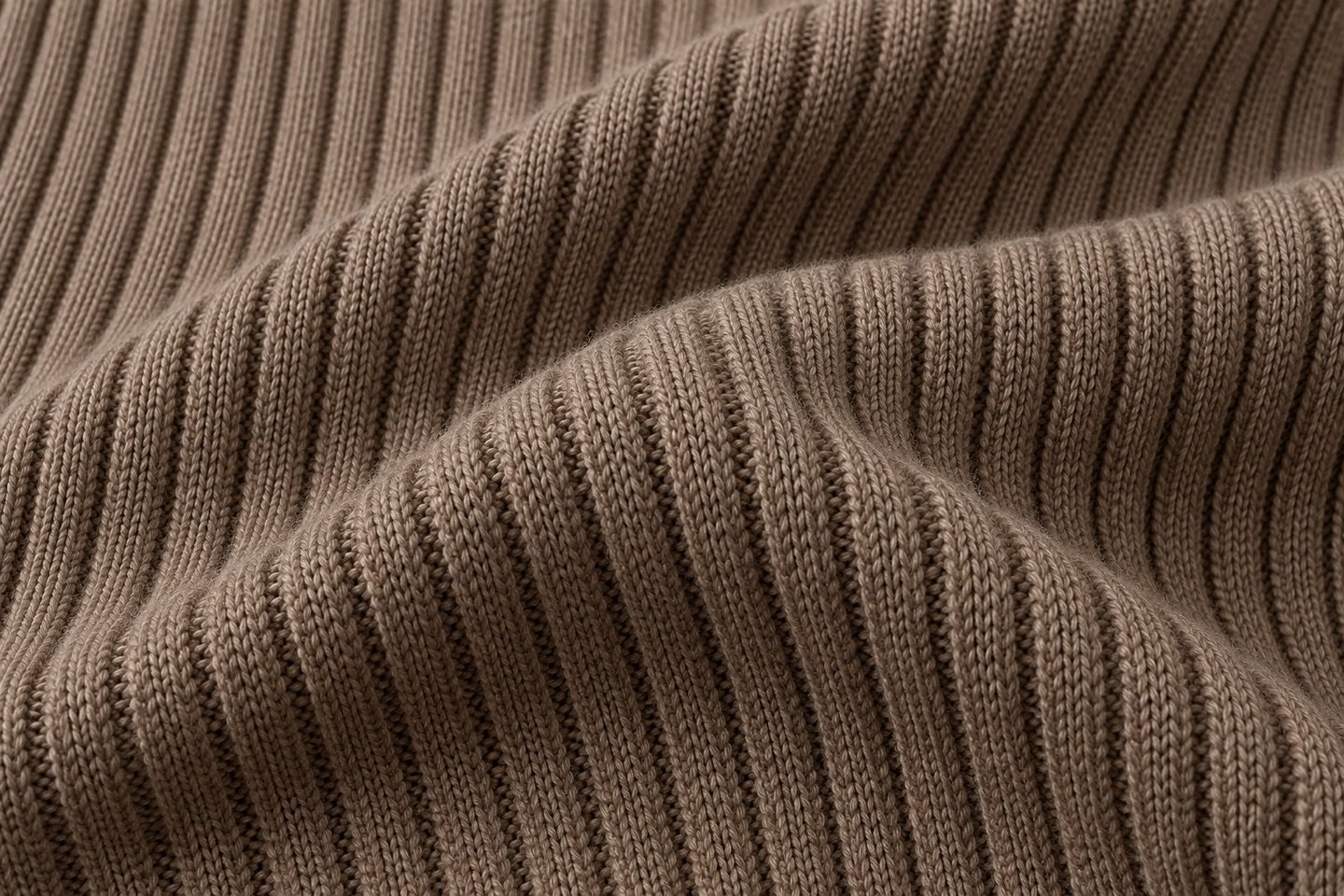
Before you confirm your fabric order.
When comparing T-shirt fabrics, review the approved sample with the decoration brief. A large print, a pale shade and a close-fitting style may call for different evaluations even when the construction is the same. Confirm the composition, finished weight and usable width before converting garment forecasts into fabric quantities.
Repeat T-shirt fabrics should refer to the same approved article and colour standard. Record dimensional stability requirements and identify any matching neck rib separately. If multiple styles share one body fabric, show the combined committed quantity while keeping the colour split and delivery schedule clear for the cutting factory.
For testing terminology, consult the AATCC testing and standards resources. Agree the actual methods and acceptance criteria for your fabric with the supplier.
T-shirt fabrics: what should the brief include?
Describe the intended fit, weight and silhouette. A fitted style may need different stretch and recovery from an oversized style, while a light-coloured garment may require a specific opacity review. Share the composition, usable width and finish alongside the target GSM.
How should you approve T-shirt fabrics?
Sample the body fabric and neckband combination before releasing the programme. Ask your garment team to assess the agreed wash results and any changes in dimensions or shape. Record the approved material reference with the garment development notes.
Turn garment requirements into a fabric enquiry
Give quantities in the unit your buying team uses and explain any consumption assumptions. Separate each colour and material component. Share the first required delivery and whether the programme involves repeat releases. This allows sampling and quotation requirements to be discussed against a practical purchasing schedule.
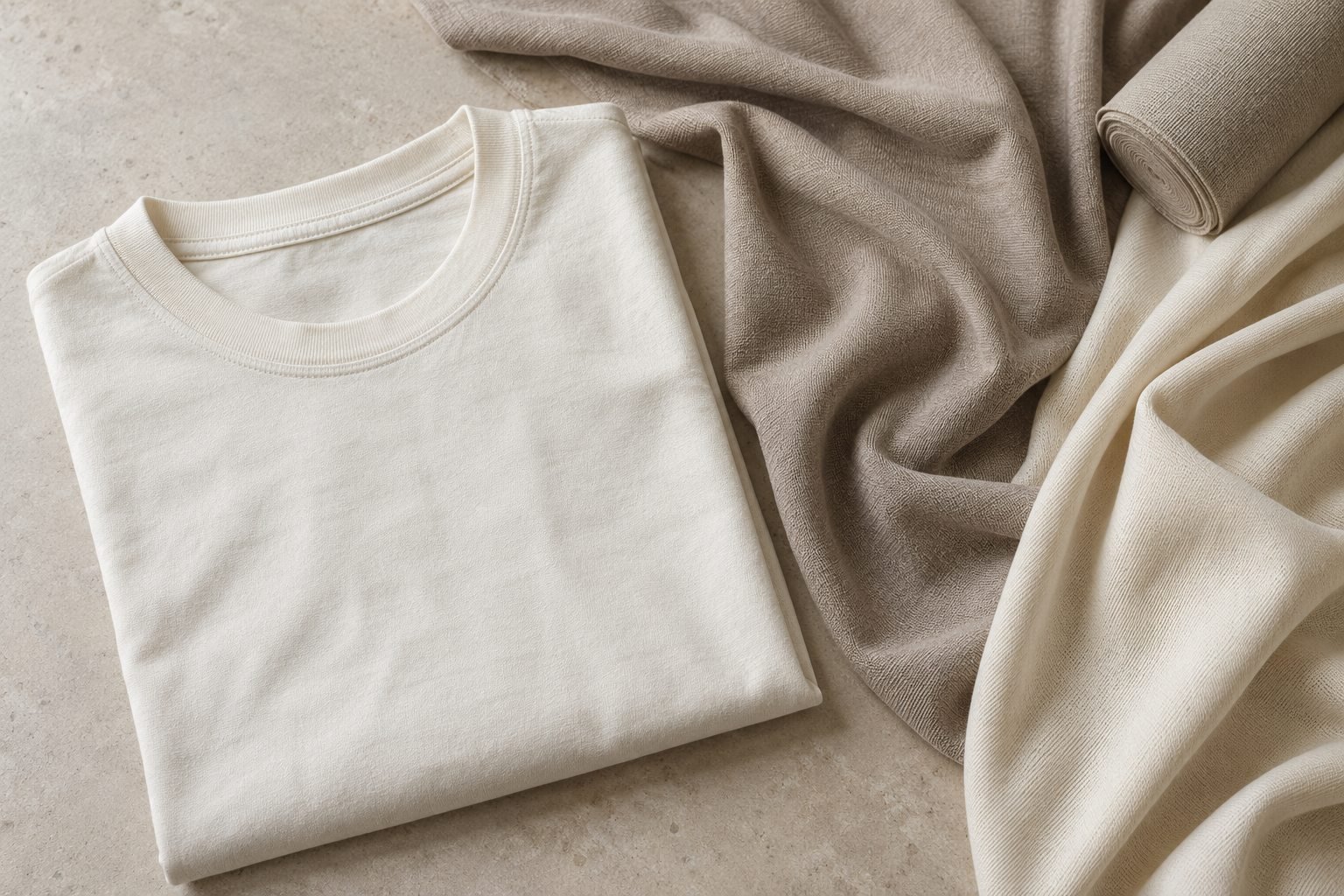
Illustrative fabric and industry references. Approve physical samples and order-specific specifications.
Plan your next bulk fabric order.
Send your fabric specification, quantity by colour and destination. We will review sampling, production and delivery requirements.