
On this page
Fago Textile buyer guides · 16 October 2026
What lab dip approval should establish
Lab dip approval gives a buyer and supplier a recorded colour reference before a bulk fabric order moves forward. For knitted fabric sourcing, the approval should identify the chosen sample, the material it represents and the next step being authorised. “The blue looks fine” leaves too much open when several colours, components and delivery dates are involved.
A lab dip is a small laboratory-dyed sample used during colour development. CottonWorks describes a process that starts with a specified colour and substrate, compares the result with a standard and can require further trials before production scale-up. Its lab dip process explanation also notes that adjustments may be needed when the formula is scaled up. The buyer workflow below focuses on the information and decisions surrounding those samples.
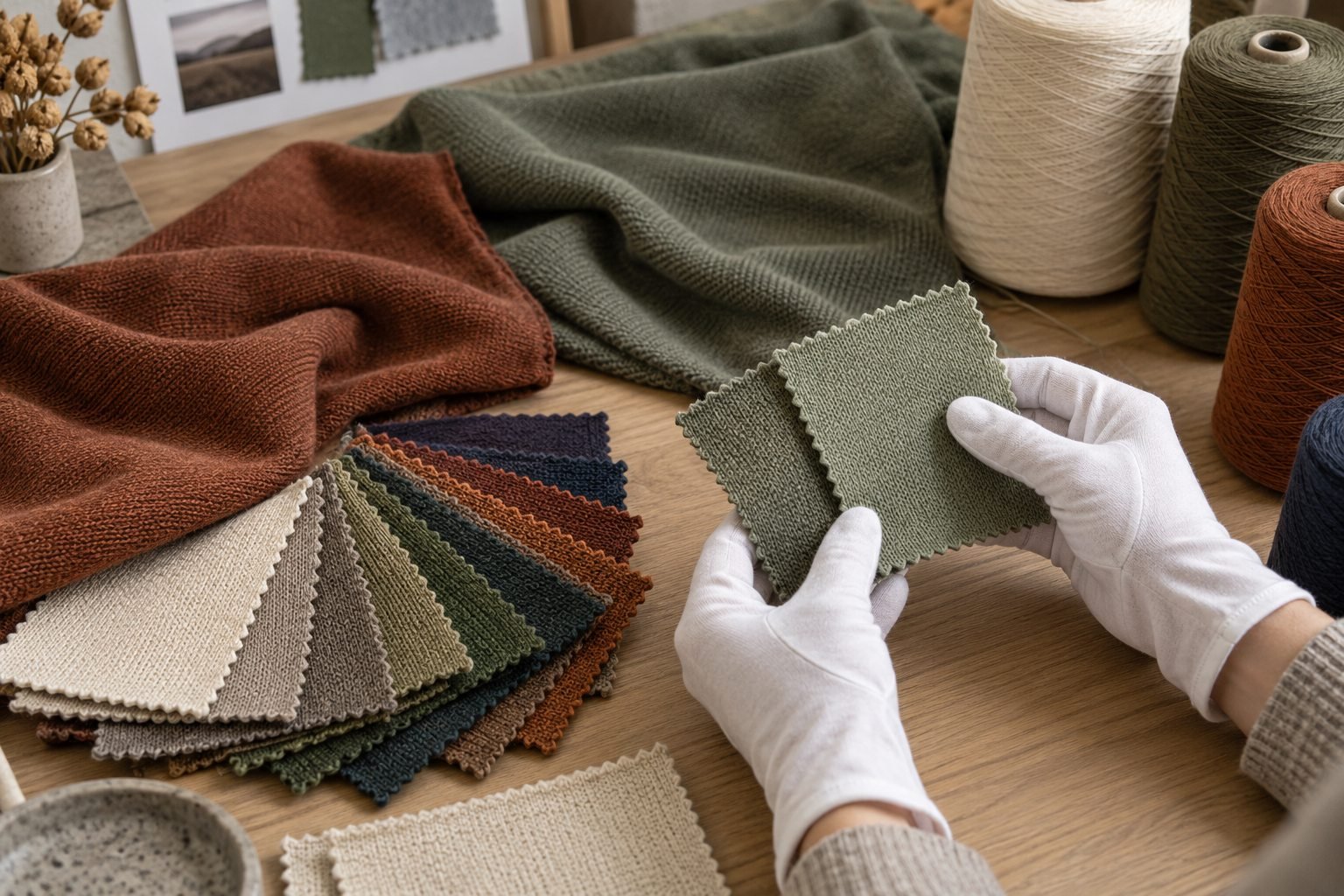
1. Identify one controlled colour reference
Give each colour a clear name and reference. If using a commercial colour system, include the complete code and relevant material or edition details. If the target is an existing garment or fabric, identify the physical swatch you are sending and keep a matching record.
A photograph can communicate the design direction, but agree which reference controls the approval. Keep the reference in the same enquiry as the fabric specification, rather than distributing conflicting versions across email threads. Nominate one person to consolidate comments from design, buying and production.
2. Connect the sample to the knitted fabric article
List construction, fibre composition, target weight and intended finish. State whether the enquiry concerns single jersey, rib, interlock or a sweatshirt construction. Ask the supplier to explain any difference between the submitted lab-dip substrate and the proposed production fabric.
For a set containing body fabric, cuffs and a collar, create a separate component line for each material. Make clear whether components must be evaluated together. A colour name alone should not be used as the identity for several different fabric articles.
3. Agree viewing and measurement conditions
Colour appearance depends on lighting. Two samples may match under one light source and differ under another, a problem known as metamerism. Datacolor’s guide to light sources and colour evaluation explains why agreed viewing conditions matter.
Ask the colour team to specify the light sources and evaluation approach used for your programme. If instrumental results are required, agree the measurement method and acceptance criteria with the responsible specialist. Avoid approving against an unexplained numerical tolerance that the receiving team cannot reproduce or interpret.
4. Request a labelled submission
Each submission should be easy to trace back to the request. The following is a practical record for the buyer’s approval file; the supplier can use its own format as long as the identities remain clear.
- Buyer, project and purchase-order or development reference.
- Fabric article, composition and intended finish.
- Colour reference and individual sample code.
- Submission date and revision number.
- Any stated difference from the requested substrate or process.
- Decision, decision date and named approver.
Keep physical samples labelled after they leave their original envelope. Do not rely on a position such as “the middle one” to identify the accepted option.
5. Write a specific approval or revision request
For an approval, state the accepted code and its scope. For example: “Colour reference Navy-01, fabric article J-180, sample B, revision 2: approved for the next agreed production step.” This is an illustrative record, not a Fago Textile sample approval.
For a revision, return one consolidated set of comments and identify the reference used. Keep rejected submissions distinguishable from the approved master. If a specification changes while colour development is under way, ask the supplier to confirm what the change means for sampling and timing before proceeding.
6. Define the bulk shade checkpoint
Record what must be reviewed after dyeing moves beyond laboratory samples. Clarify whether the buyer needs a production cutting, lot-level shade information or another agreed submission before shipment or cutting. Assign responsibility for that decision and connect it to the delivery plan.
Keep colour approval separate from any required colourfastness, dimensional or other performance testing. A signed colour sample should not be treated as a report for tests that were never requested or performed. Our dyeing, printing and finishing enquiry page helps you describe the process scope alongside the colour brief.
7. Preserve the reference for repeat orders
Store the approved sample and digital approval record with the final fabric specification. On a repeat order, identify whether the target remains the original master or an explicitly approved production reference. Avoid quietly shifting the target from shipment to shipment.
Before confirming the next release, review any changes to article, composition, finish, colour quantity or delivery window. Send these changes in one brief so the team can decide what requires renewed approval.
Lab dip approval questions
How many lab-dip rounds will my order need?
Ask for an order-specific sampling plan. The number of rounds depends on the target and the results; a fixed number should not be promised before the brief is reviewed.
Can I approve body fabric and rib together?
You can request coordinated evaluation, but keep each component and its sample code identifiable in the decision.
How do I start a custom colour enquiry?
Send the colour reference, knitted construction, composition, GSM, quantity per colour and destination. Review our MOQ and colour minimum guide, then request a quotation below.
Plan your next fabric order.
Send your fabric specification, quantity by colour and destination to Fago Textile in Istanbul, Türkiye.