On this page
Fago Textile buyer guides · 19 October 2026
Specify stretch behaviour before placing a bulk order
Cotton elastane fabric should be selected through an agreed performance brief, not the fibre percentage alone. A label such as 95% cotton and 5% elastane identifies a blend; it does not tell the buyer exactly how far the finished fabric will extend, how it will recover or how the garment will fit after wear.
For fitted tops, leggings and other stretch-knit products, define the intended use with your technical team before requesting samples. Our cotton and elastane fabric options provide a starting point. This guide explains six buying checks that connect sample development, testing and bulk supply without treating one blend ratio as a universal specification.
1. Choose the knit construction as well as the blend
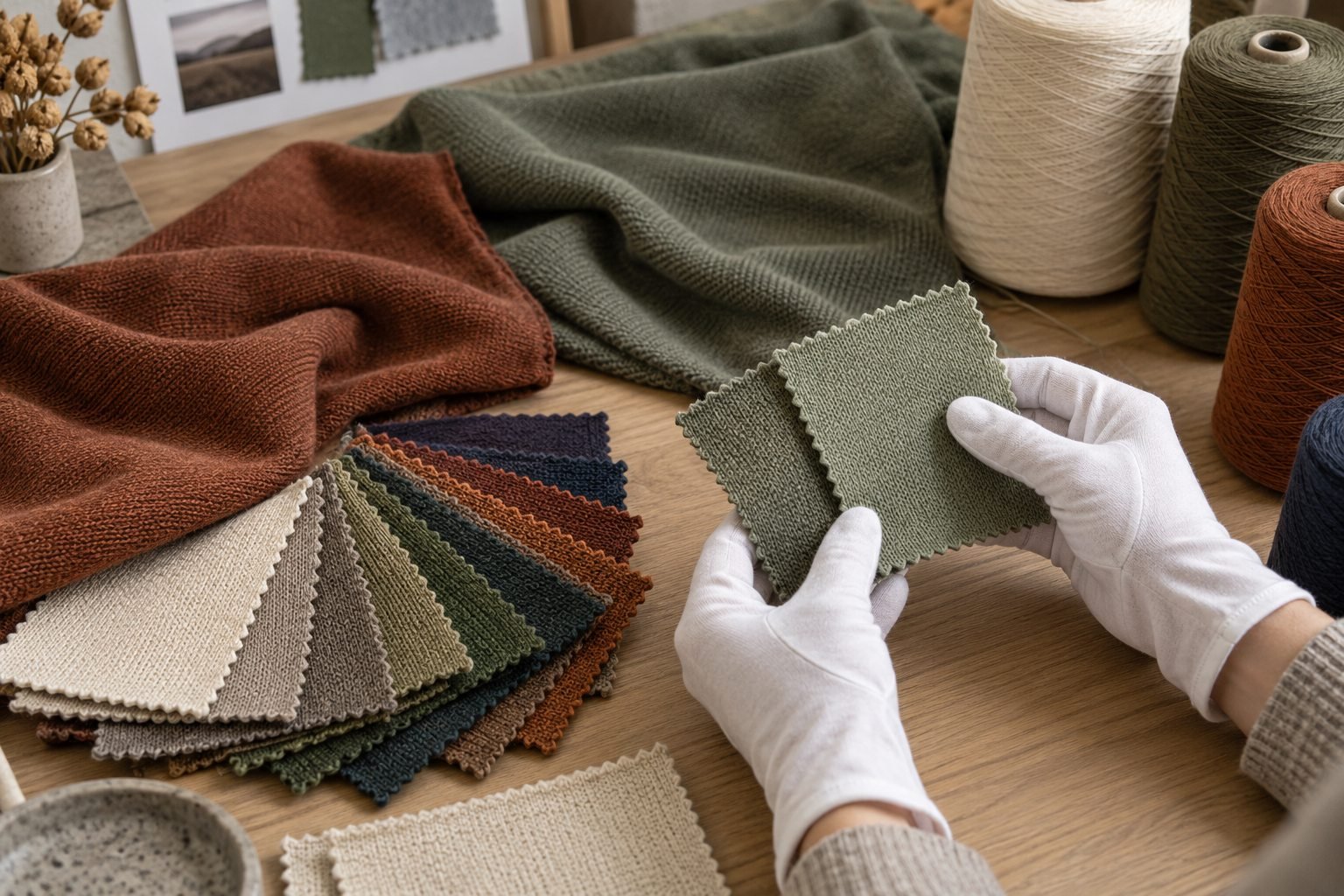
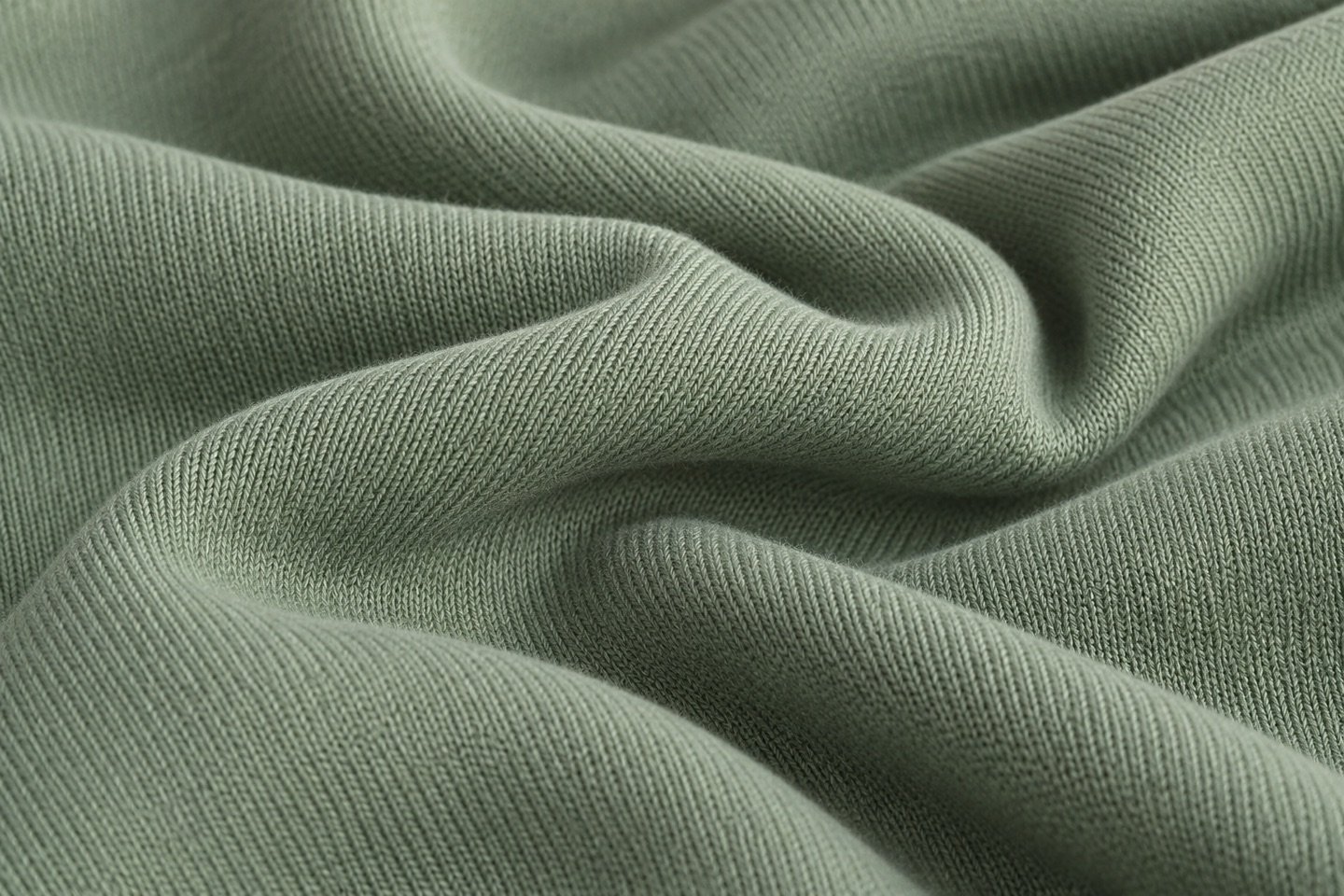
Start by identifying the structure: for example, single jersey, interlock or rib. Request labelled samples with their composition, nominal finished weight and width. Compare the face, reverse and handle before deciding which material should enter garment development.
For cotton elastane fabric, keep each construction and finish under a separate article reference. If the supplier proposes an alternative, record what changes and request a new trial where the change matters. Do not approve an alternative simply because its cotton and elastane percentages match those of the original sample.
2. Separate stretch, recovery and residual growth
Stretch describes extension under defined conditions. Recovery concerns the return after that extension is removed. Residual growth describes the extra length remaining at a stated measurement time. A useful report identifies the fabric direction, loading or extension conditions and timing so the numbers have a clear meaning.
The ASTM D2594/D2594M method overview distinguishes stretch under a specified load from growth after extension and release. Its scope concerns low-power stretch knits, and it cautions against using the method for commercial shipment acceptance because inter-laboratory precision is poor. Ask your laboratory to select a suitable method and agree how results will be used; do not copy a test name into every order automatically.
3. Write a cotton elastane fabric test brief
Give the laboratory the garment use, reference sample and the buyer’s requirements. Ask it to identify an appropriate method, specimen preparation, directions and reporting basis. Agree acceptance criteria with the supplier for your specific product rather than borrowing a percentage from an unrelated fabric listing.
- Article code, composition, colour and sample or production lot.
- Fabric direction and the agreed conditioning or pre-treatment.
- Test method and version, including any agreed deviation.
- Loading or extension conditions and the measurement timings.
- Individual results, summary values and the agreed interpretation.
When comparing cotton elastane fabric reports, check that they use the same basis. A high extension figure from one procedure cannot simply be ranked against a result obtained under different conditions. Clarify unexpected differences before accepting a substitute material.
A simple illustration of extension and remaining growth
Imagine a marked length of 100 mm extending to 130 mm under a stated test condition. The increase is 30 mm, or 30% of the original marked length. If it measures 103 mm after release and the specified waiting period, the remaining increase is 3 mm, or 3% of the original length.
These values are an arithmetic illustration, not a laboratory procedure, acceptance limit or Fago Textile product claim. They show why the original length, extension condition and recovery interval must accompany a result. The sample that extends furthest is not necessarily the sample that best retains the shape your garment requires.
4. Evaluate the finished garment in use
Make a representative garment using the proposed cotton elastane fabric, intended pattern, seams and components. Record fit observations at the relevant areas, such as elbows, knees, neckline or waistband. Use a defined wear trial if your product team needs to assess shape retention during use.
Review appearance and dimensions after the agreed care routine. Stretch behaviour and wash dimensional change answer different questions, so keep both in the approval record. Our knitted fabric shrinkage guide covers the latter. Include the decorator in development if printing or another applied process forms part of the finished garment.
5. Confirm the cutting and production requirements
Ask your cutting and sewing team which fabric presentation and handling details they need before production. Record finished usable width, open-width or tubular format, roll identification and any agreed preparation before cutting. Have the team assess the proposed material with the actual pattern rather than assuming a previous marker will provide the same yield.
Link the approved fabric reference to the garment sample and specification revision. If the supplier proposes a change in construction, composition or finishing, route it through the agreed approval process. For a new development, discuss the brief through our custom fabric development page and keep outstanding decisions visible.
6. Compare bulk offers on the approved specification
Request cotton elastane fabric quotations with the article, finished GSM, usable width, finish and quantity per colour stated together. Include the approval sample code and the agreed testing responsibilities. Confirm the price unit, sampling charges, delivery scope and requested release dates.
A lower kilogram price may not produce a lower garment material cost when weight, width or yield changes. Use our fabric cost conversion guide to align the arithmetic, then ask the cutting team to compare actual consumption. For recurring orders, keep confirmed quantities separate from forecasts and agree how later lots will be checked against the approved reference.
Cotton elastane fabric: buyer questions
Does 5% elastane guarantee a specific stretch percentage?
No. Composition is one specification field. Request measurements for the finished article under agreed conditions and evaluate it in the intended garment.
Can I approve stretch by pulling a swatch by hand?
A hand assessment can help screen samples, but it does not provide a controlled measurement. Use a documented test and garment trial when a measurable performance requirement forms part of the order.
What should a bulk enquiry include?
Include the garment use, construction, composition, GSM, width, colours, quantities, performance brief and destination. Share a reference sample and identify any requirements that still need development.
Discuss your cotton elastane fabric requirements.
Send your fabric specification, quantity per colour and delivery destination. Discuss samples, wholesale orders and recurring supply with our sales team.