On this page
Fago Textile buyer guides · 19 October 2026
Buying piqué for a polo production programme
Wholesale pique fabric buying starts with the polo shirt you need to make. A corporate uniform, a retail polo and a fitted promotional garment can require different surfaces, blends and finishing decisions. Send the supplier a reference garment or swatch and identify the features that must remain consistent across your programme.
This guide helps uniform suppliers, importers and garment factories turn a polo brief into an order-ready material specification. Start with our piqué knit fabric range, then use the seven checks below to compare samples and quotations. The aim is to approve the body fabric, collar, decoration and care performance as one coordinated product.
1. Define the piqué texture with a physical reference
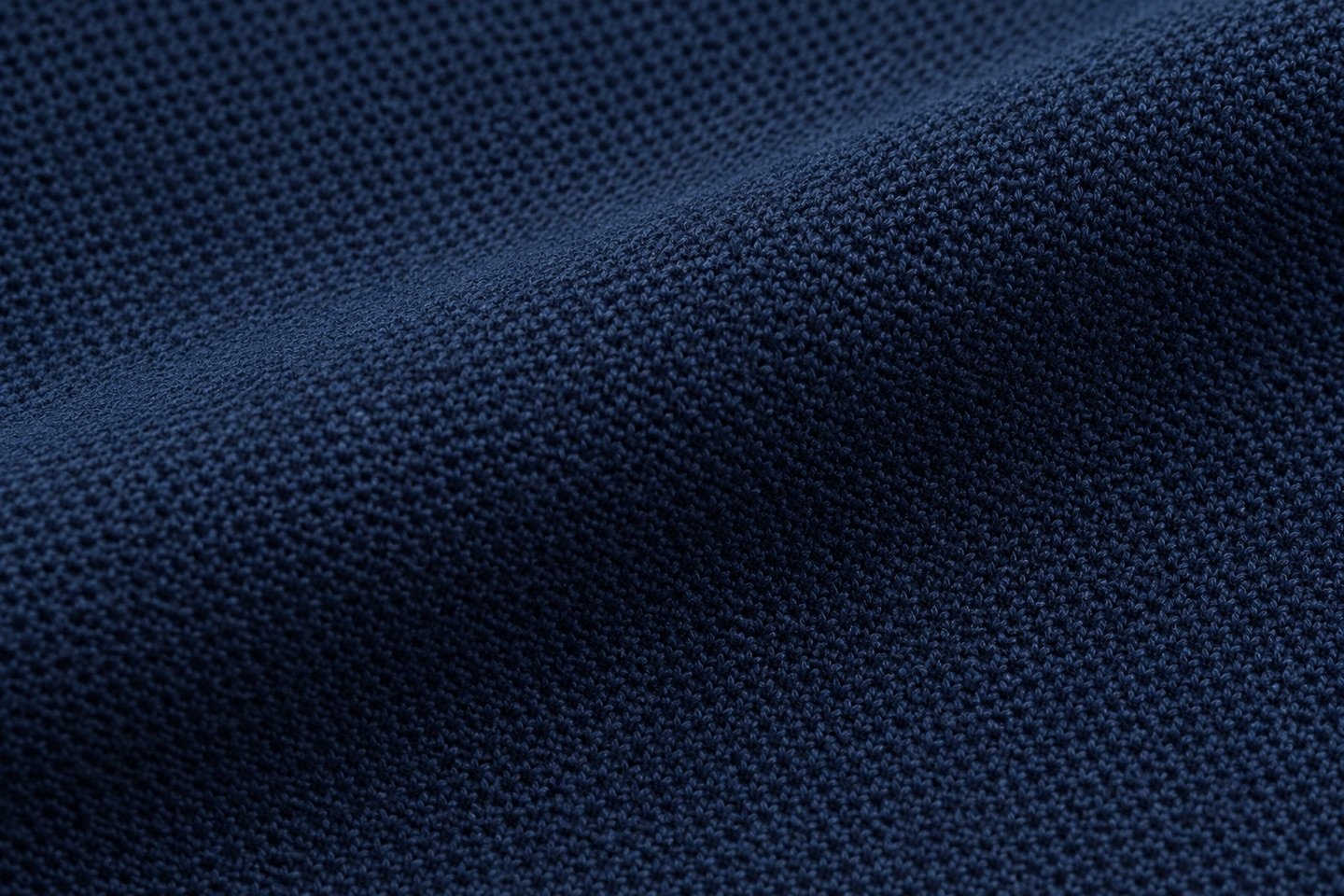
Piqué is a recognised knit option for polo shirts; the CottonWorks knit collection includes piqué alongside other cotton constructions. However, the product name alone does not identify the exact surface you want. Ask for a labelled swatch and examine the face and reverse under consistent lighting.
For wholesale pique fabric, record the approved article code and photograph the texture beside a scale. Keep the physical reference as the approval standard. If two offers describe different texture sizes or constructions, treat them as separate options until your product team has compared them. A matching colour and weight are not enough to establish that the articles are equivalent.
2. Match the composition to the uniform brief
Specify the fibre percentages separately from the knit name. Compare cotton knits, cotton elastane options or polyester blends against your intended fit and care requirements. Confirm which composition the supplier can offer for the selected texture.
For a uniform programme, ask the customer how garments will actually be used and laundered. Put those conditions in the development brief before sampling. Do not infer industrial-laundry suitability, moisture management or other measured performance from the fibre name. Where the customer requires a specific claim, agree appropriate evidence for the exact material and garment.
3. Assess the finished weight, width and garment together
Record the target finished GSM, tolerance and usable width for wholesale pique fabric. Confirm whether the quotation describes open-width fabric or a tube measured flat. Give the cutting room the proposed dimensions so it can review consumption with the actual polo pattern and size distribution.
Make a sample garment and check the placket, side vents, hem and shoulder shape. Assess the fabric around embroidery or other decoration zones as well as the undecorated body. Keep observations about drape and handle separate from weight measurements; this prevents a correct GSM result from being treated as complete product approval.
4. Approve collars and cuffs with the body fabric
A polo programme needs more than a body-fabric swatch. State whether the design uses a separately knitted collar, rib trim or another construction. Share the component drawing, dimensions, stripe layout and quantity requirements. Ask the supplier which components are included in the offer and which need separate sourcing.
Assess body, collar and cuffs together for appearance, shade and behaviour in a sewn garment. Record separate component codes, even when all parts use the same colour name. For cut rib components, our rib fabric page is a starting point for the specification discussion. Component availability and compatibility must be confirmed for your programme.
5. Trial embroidery and printing before bulk approval
Send the actual logo artwork, intended position and decoration process to the sample team. Ask the decorator to trial the proposed backing, stitch settings or print process on the chosen material. Inspect the appearance of the decorated area and the surrounding fabric on a completed sample.
Evaluate the sample after the agreed care procedure as well as before it. Keep the approved decoration file, fabric reference and trial notes together. A result obtained on another knit should not automatically approve a new wholesale pique fabric article. If a customer changes the logo size or placement, review whether another trial is needed.
6. Plan colour continuity across repeat releases
Corporate uniform buyers may order the same colour across multiple deliveries. Identify the approved reference, the person authorised to approve shade and the method for comparing new lots. Keep body and trim approvals linked without assuming that separate materials will look identical under every light source.
Use our lab dip approval guide for the colour workflow. Provide confirmed quantities per colour and a separate forecast for later releases. Ask when future quantities must be booked, and how lot references will be shown on roll labels. A forecast supports planning but does not itself reserve production or guarantee a future shade match.
7. Send a complete wholesale pique fabric enquiry
A clear enquiry makes offers easier to compare and reduces clarification rounds. For polo shirt fabric sourcing, include the following details and mark any undecided item as pending:
- Intended garment, customer use and reference sample code.
- Piqué texture, fibre composition, finished GSM and usable width.
- Colours and quantities per colour, with the purchasing unit.
- Collar and cuff specifications, quantities and sourcing responsibility.
- Logo application, care procedure and required approval checks.
- Delivery destination, requested release dates and repeat-order forecast.
Request a written breakdown of body fabric, components, sampling and delivery scope. Discuss minimum quantities and timing for the actual specification. For recurring wholesale pique fabric orders from Turkey, share your article list and release schedule through our bulk supply enquiry.
Wholesale pique fabric: buyer questions
Does a piqué quotation include polo collars?
Only if the offer explicitly includes them. List collars and cuffs as separate components, then confirm their quantities, prices and approval references.
Can one fabric serve every uniform customer?
Different customers may require different fits, decoration and care routines. Use a garment trial and the customer’s written requirements to decide whether an existing article is suitable.
What should I send a piqué manufacturer in Turkey?
Send a swatch or technical brief, colour quantities, component requirements and destination. Explain whether you need a single wholesale order or scheduled replenishment for a continuing polo programme.
Request a wholesale piqué fabric quotation.
Send your fabric specification, quantity per colour and delivery destination. Discuss samples, wholesale orders and recurring supply with our sales team.