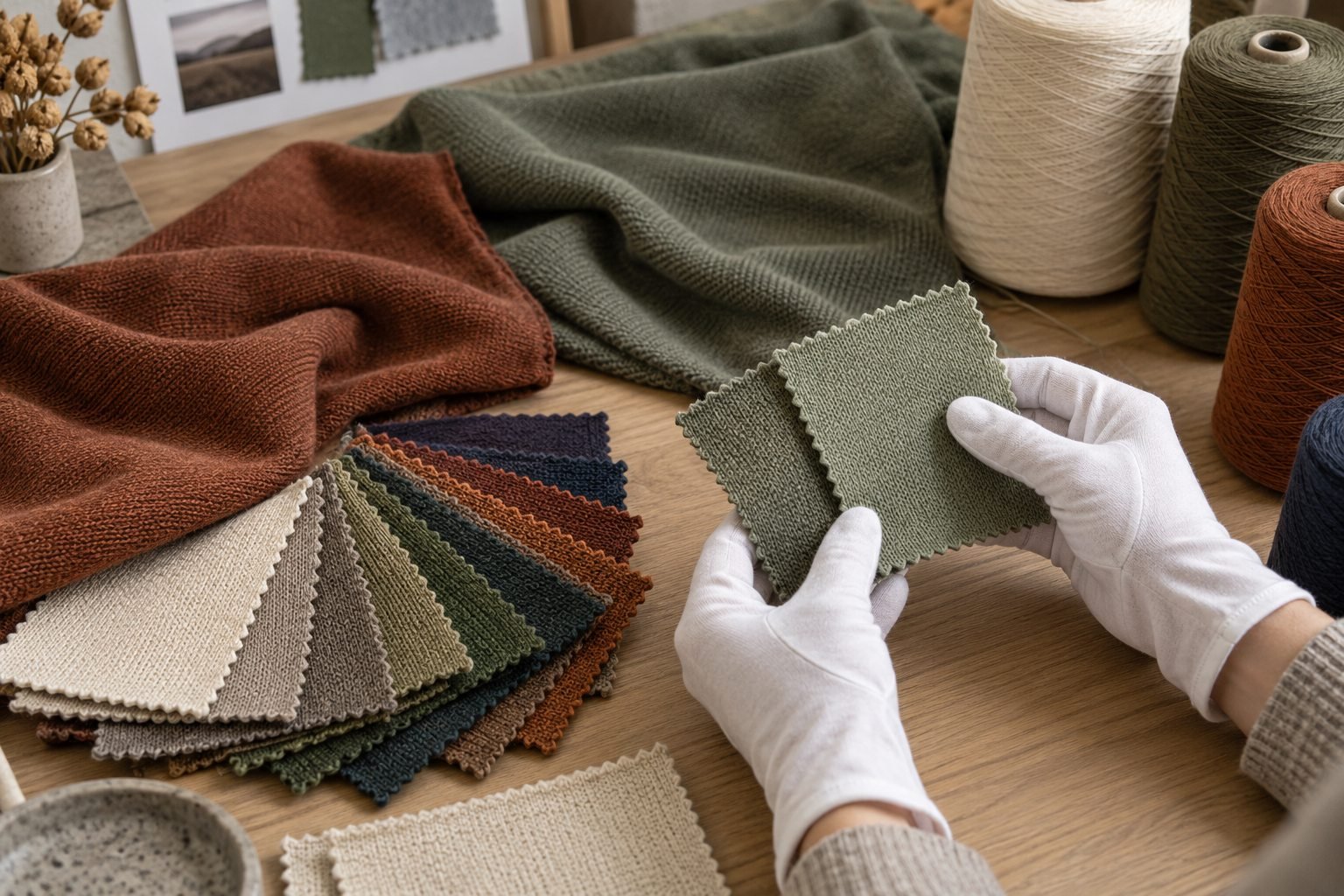
On this page
Choosing rib fabric for cuffs in a bulk programme
Rib fabric for cuffs should work with the garment body, the opening dimensions and the intended fit. Choosing a trim by colour alone can leave the sample team with a cuff that looks correct on a swatch card but feels too heavy, loose or restrictive when sewn. Begin with the garment drawing and evaluate the body and cuff as a pair.
This guide compares 1×1 and 2×2 rib for buyers sourcing sweatshirt, hoodie and casualwear components. For production enquiries, visit our rib fabric manufacturer page. Identify whether you need continuous fabric for cutting, a tubular supply format or individually shaped components; these are different requests and must be confirmed in the quotation.
1×1 vs 2×2 rib: what changes?
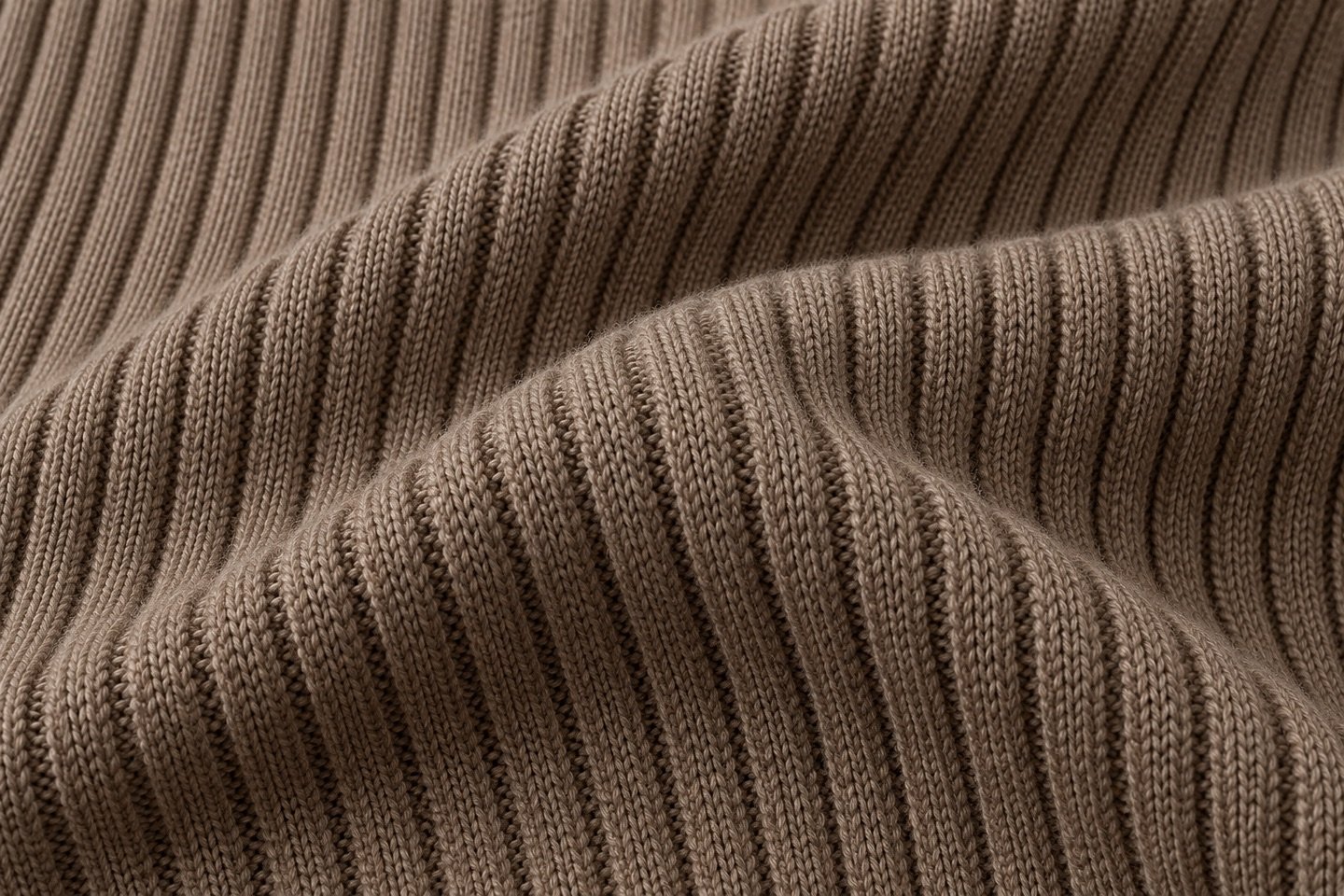
The numbers describe the arrangement of knitted ribs, not a fibre blend or quality grade. A 1×1 rib alternates single face and reverse wales; a 2×2 rib groups them in pairs. CottonWorks explains the paired needle arrangement in its 2×2 rib reference. Both structures need a finished-fabric specification before they can be compared commercially.
| Buying question | 1×1 rib | 2×2 rib |
|---|---|---|
| Visual starting point | Fine alternating vertical ribs. | Paired ribs with a more defined grouped appearance. |
| What should be sampled? | Edge appearance and fit at the intended opening. | Rib scale and appearance at the intended opening. |
| Can the name predict recovery? | No; test the proposed finished article. | No; test the proposed finished article. |
| What makes offers comparable? | Matched composition, finished weight, usable width, delivery format and agreed performance. | |
Do not assume that every 2×2 article is heavier or that every 1×1 article has better recovery. Yarn, construction settings, elastane and finishing affect the result. Keep competing samples under separate article codes until the garment trial establishes which one suits the brief.
Match the cuff to the body fabric
Review rib fabric for cuffs beside the actual French terry or three-thread fleece proposed for the garment. Examine thickness at the seam, bulk when the cuff is folded and the transition between the two surfaces. A cuff and body do not need identical GSM to work together; the construction must suit the finished garment.
Approve colour on both materials under the buyer’s agreed viewing conditions. The same colour reference does not remove the need to check each substrate. Link the approved body shade and cuff shade in the approval record, then retain the reference pair for repeat orders. Use our lab dip approval workflow to document revisions and outstanding decisions.
Check opening size, stretch and recovery together
Give the sample team the required finished cuff dimensions, seam allowance, folding arrangement and intended size range. Ask it to trial the selected rib fabric for cuffs in the actual garment rather than extrapolate from a hand-stretched swatch. Inspect comfort, seam appearance and the opening after the agreed handling and care sequence.
Where measurable stretch or residual growth requirements apply, ask the laboratory to select suitable conditions and record the direction, loading and recovery interval. A fibre label such as cotton/elastane does not define these results. Our cotton elastane buying guide explains why extension and remaining growth must be kept separate.
Keep the approval decision specific: record the cuff pattern revision, fabric article and sample garment code. If the trim composition or finishing route changes later, review whether another trial is required before the new lot enters garment production.
Calculate trim quantities in the correct unit
A body-fabric order does not automatically establish the cuff requirement. List cuffs, neckbands and waistbands separately, including how many components appear on each garment. Your cutting team should calculate consumption from the approved dimensions, usable fabric width and size distribution.
For example, an order for 10,000 garments with two cuffs each starts with 20,000 finished cuffs before any agreed cutting or rejection allowance. That count is not yet a kilogram order. Converting it into fabric weight requires the actual cutting layout and material specification. Treat this as a planning example, not a recommended allowance or a promise of yield.
Confirm whether a tube is quoted by laid-flat width or another clearly defined measurement. Do not compare that number directly with open usable width. Request the price unit, net quantity basis and packing arrangement in writing so purchasing and cutting teams work from the same assumptions.
What to send a rib fabric supplier in Turkey
To request rib fabric for cuffs from Fago Textile, send a reference swatch or garment drawing with the following information:
- Garment application and whether the rib is for cuffs, waistband, neckband or body panels.
- Requested 1×1 or 2×2 structure, fibre percentages and finished GSM.
- Usable width, open or tubular format, and how width is measured.
- Body-fabric article, colour references and matching approval requirements.
- Finished component dimensions, quantities per colour and purchasing unit.
- Sampling needs, testing requirements, destination and requested delivery window.
State confirmed quantities separately from any replenishment forecast. Ask for minimum quantities, sampling charges and lead time for the proposed article. For bulk and recurring fabric supply, the quotation should identify both body and trim scope so a missing component does not delay garment assembly.
Rib fabric for cuffs: buyer questions
Is 1×1 or 2×2 rib better for hoodie cuffs?
Neither is universally better. Compare the rib appearance, cuff dimensions, body-fabric pairing and tested behaviour in a sewn sample. Select the article that satisfies the approved garment brief.
Can the same rib be used for cuffs and waistbands?
Possibly, but evaluate each component’s dimensions and fit. Approval of a cuff alone does not establish the correct waistband pattern or quantity.
Does a bulk rib order include pre-cut cuffs?
Only when explicitly agreed. Continuous fabric, tubular fabric and finished components have different supply scopes. Specify the required delivery form before comparing prices.
Request rib fabric for your cuff and trim programme.
Send your specification, quantity per colour and delivery destination. Our sales team will review your sampling, bulk order and recurring supply requirements.