On this page
Jacquard vs printed fabric: start with the garment
Jacquard vs printed fabric is a development decision about how a design becomes part of the material. For a buyer of knitted apparel fabrics, the choice affects the appearance of both sides, the sampling route and the information required for a useful quotation. Start with the desired garment result and compare representative samples.
This guide focuses on patterned knitted fabrics, rather than woven upholstery or finished knitwear. Explore our knitted jacquard fabric development and dyeing, printing and finishing pages when preparing your brief. Feasibility, processing scope and commercial terms are confirmed against the actual design.
1. Understand how the pattern is created
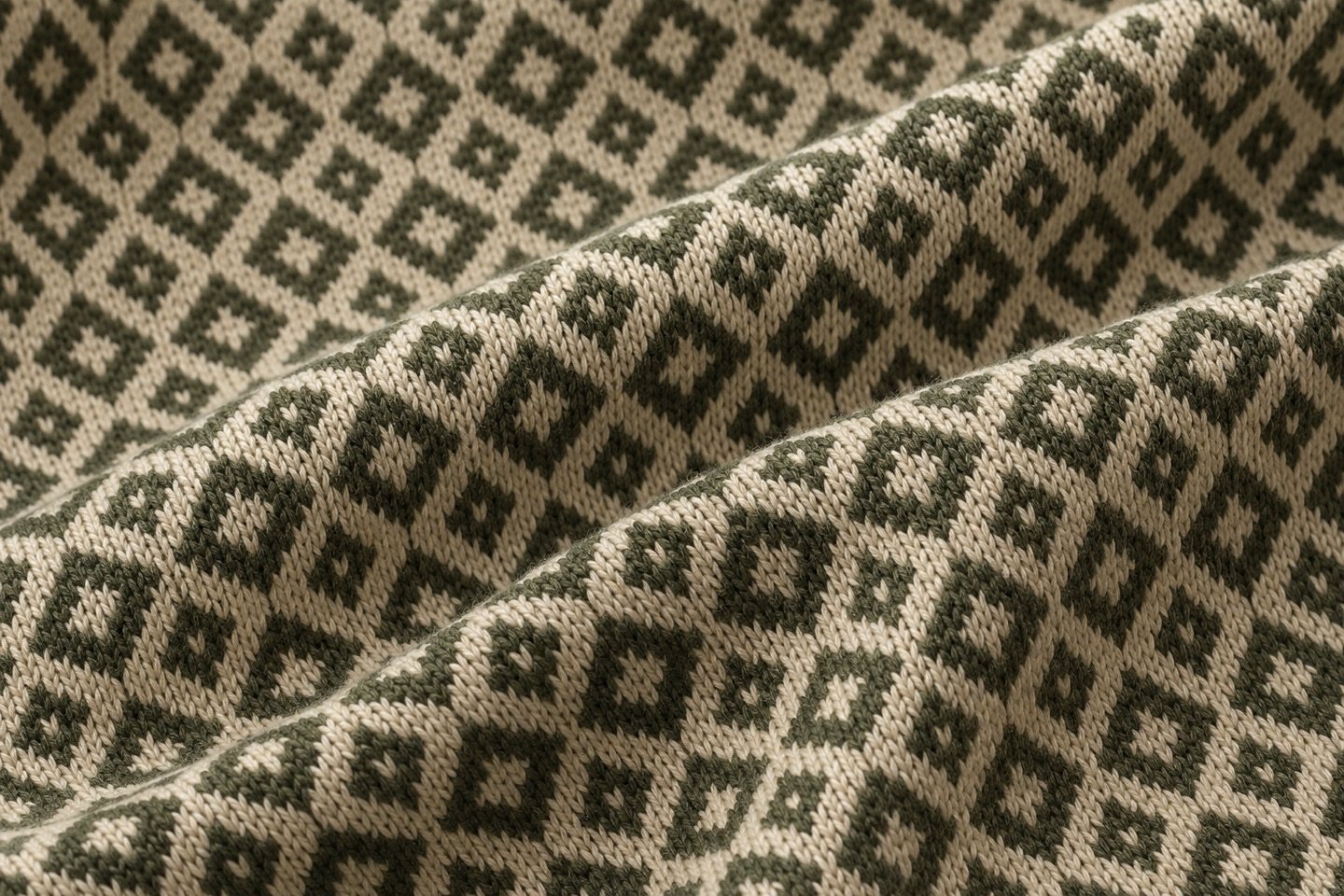
In jacquard knitting, needle selection helps form the pattern during fabric manufacture. CottonWorks describes programmed needle selection across different knitting systems in its guide to designing knit textiles. Printed fabric receives its colour design through a printing process applied to a suitable textile substrate.
| Decision point | Knitted jacquard | Printed knit |
|---|---|---|
| Development inputs | Pattern repeat, yarn colours, construction and face/reverse requirements. | Artwork, scale, base fabric, colour requirements and proposed print route. |
| Sample to approve | Knitted pattern development in the proposed construction. | Print trial on the proposed base article, followed by garment assessment. |
| Cost comparison | Include yarn, knitting development and finishing scope. | Include base fabric, preparation, print development and finishing scope. |
| Quality decision | Approve the actual sample and written specification; neither route alone proves quality. | |
For jacquard vs printed fabric, avoid using a product photograph as the complete specification. Similar-looking images can conceal different reverse surfaces, construction weights and handles.
2. Control artwork, repeat and scale
Send an identifiable artwork version with repeat dimensions, colour references and the intended garment orientation. Explain whether the design must continue across seams or sit at a specific garment position. Include a scale reference when providing photographs of an existing sample.
Ask the technical team to review which design details can be reproduced through the proposed route. Tiny elements, colour transitions and texture effects need discussion before an initial image becomes a production commitment. Record every approved adjustment, keeping the original request and the accepted development distinguishable.
3. Review face, reverse and handle
Inspect both sides of each sample. A purchase decision should account for how the reverse feels against skin and how the material behaves around folds, seams and openings. In unlined garments, the wearer may experience the reverse throughout use even when retail photography shows only the face.
For a jacquard vs printed fabric comparison, hold the end use constant. Ask for samples with their composition, finished GSM and usable width labelled. Do not describe a difference in weight or construction as a consequence of the pattern route until those other variables have been considered.
4. Approve the right sampling stage
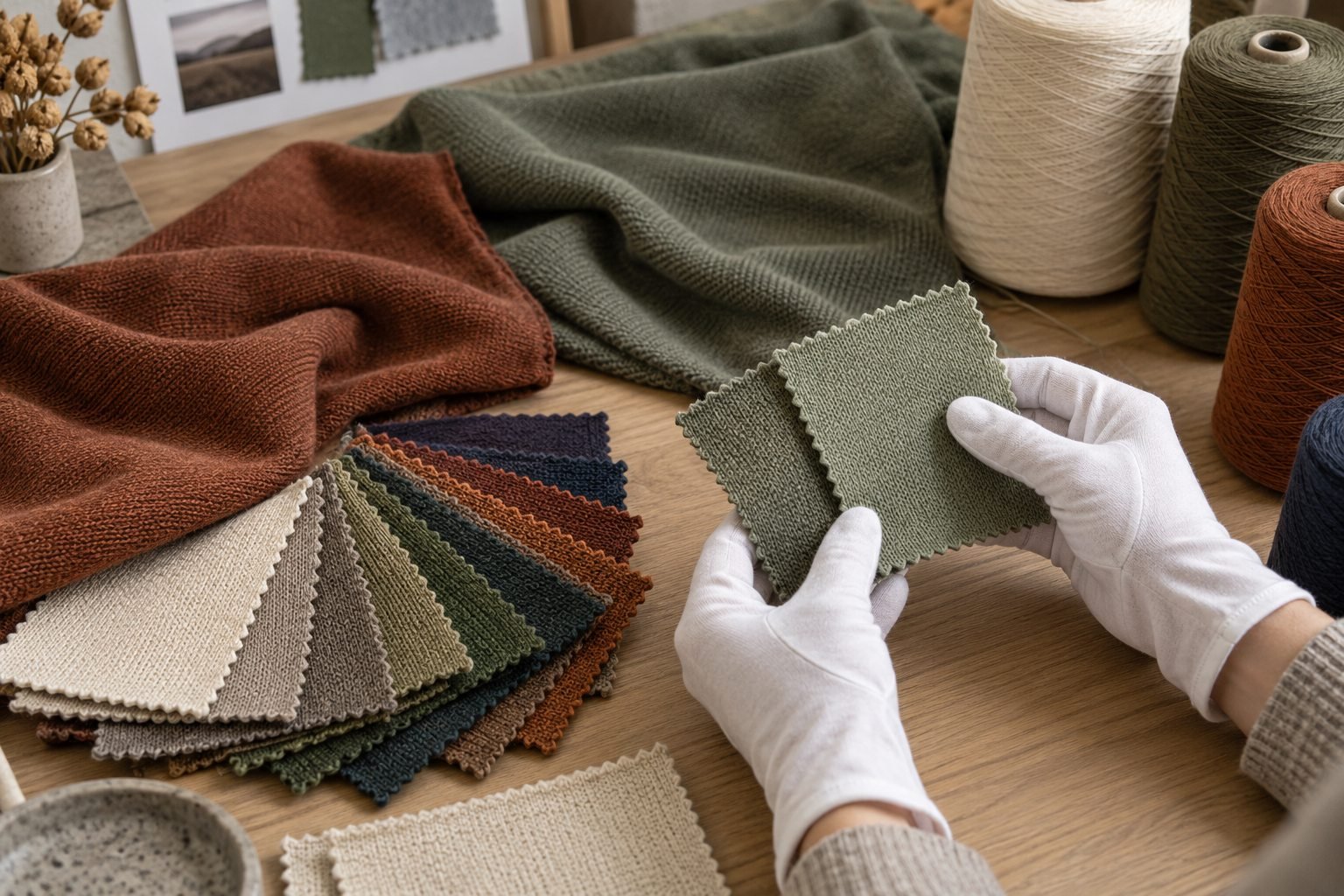
A colour reference, a pattern development and a finished garment sample answer different questions. Identify which stage you are reviewing and what remains pending. For a printed option, approve the proposed artwork on the actual base fabric. For a jacquard option, approve the knitted design in the proposed yarn and structure.
Keep sample codes and approval dates attached to the specification. Use explicit decisions such as approved, approved with stated changes or resubmission required. If a supplier presents a substitute base fabric or yarn combination, compare the new sample before treating it as the approved article.
5. Check the effect on cutting yield
Ask the garment factory to evaluate pattern direction and matching requirements in the marker. A repeat that must align across the front or at a seam may affect consumption. The actual effect depends on the artwork, usable width, pattern pieces and size mix; there is no universal allowance for every patterned knit.
Give the cutting team the real repeat dimensions and a representative sample. Compare the proposed materials using the same garment order. Our fabric cost-per-metre guide helps align price units, but the marker and approved specification determine how much usable material the programme needs.
6. Agree relevant care and quality checks
Have the buyer’s technical team identify checks for colour, dimensional change, surface appearance and any other performance relevant to the garment. Confirm the intended care procedure before testing. Assess the finished patterned article rather than assume that a report for an unprinted base or different jacquard colourway covers every requirement.
Record the method, conditions, sample identity and agreed acceptance criteria. Neither “jacquard” nor “printed” guarantees colourfastness, durability or wash performance. Ask for order-specific evidence where a measurable claim will be part of the customer specification.
7. Compare complete wholesale quotations
When comparing jacquard vs printed fabric offers, request a breakdown that makes the development and delivery scope visible:
- Design reference, artwork revision and repeat dimensions.
- Fibre percentages, construction, finished weight and usable width.
- Colourways and quantity per design or colourway.
- Sample stages, development charges and approval responsibilities.
- Included preparation, colouring, finishing and agreed tests.
- Price unit, minimum quantities, packing and delivery destination.
Ask which changes would require a new sample or quotation. For several designs shipped together, retain separate article and lot references. Discuss your pattern brief with our custom fabric development team before confirming the bulk schedule.
Jacquard vs printed fabric: buyer questions
Is jacquard always more expensive than print?
No universal price ranking is reliable. Compare the actual yarns, construction, design complexity, finishing, quantities and included development work.
Can a photograph establish that a fabric is jacquard?
Not reliably on its own. Request the construction description and a labelled sample showing both sides before specifying the article.
What should a jacquard wholesaler or importer send first?
Send the pattern reference, garment use, expected quantity per colourway and delivery destination. Add composition, GSM and width targets where known, and identify any open development decisions.
Discuss your patterned knit fabric development.
Send your specification, quantity per colour and delivery destination. Our sales team will review your sampling, bulk order and recurring supply requirements.